
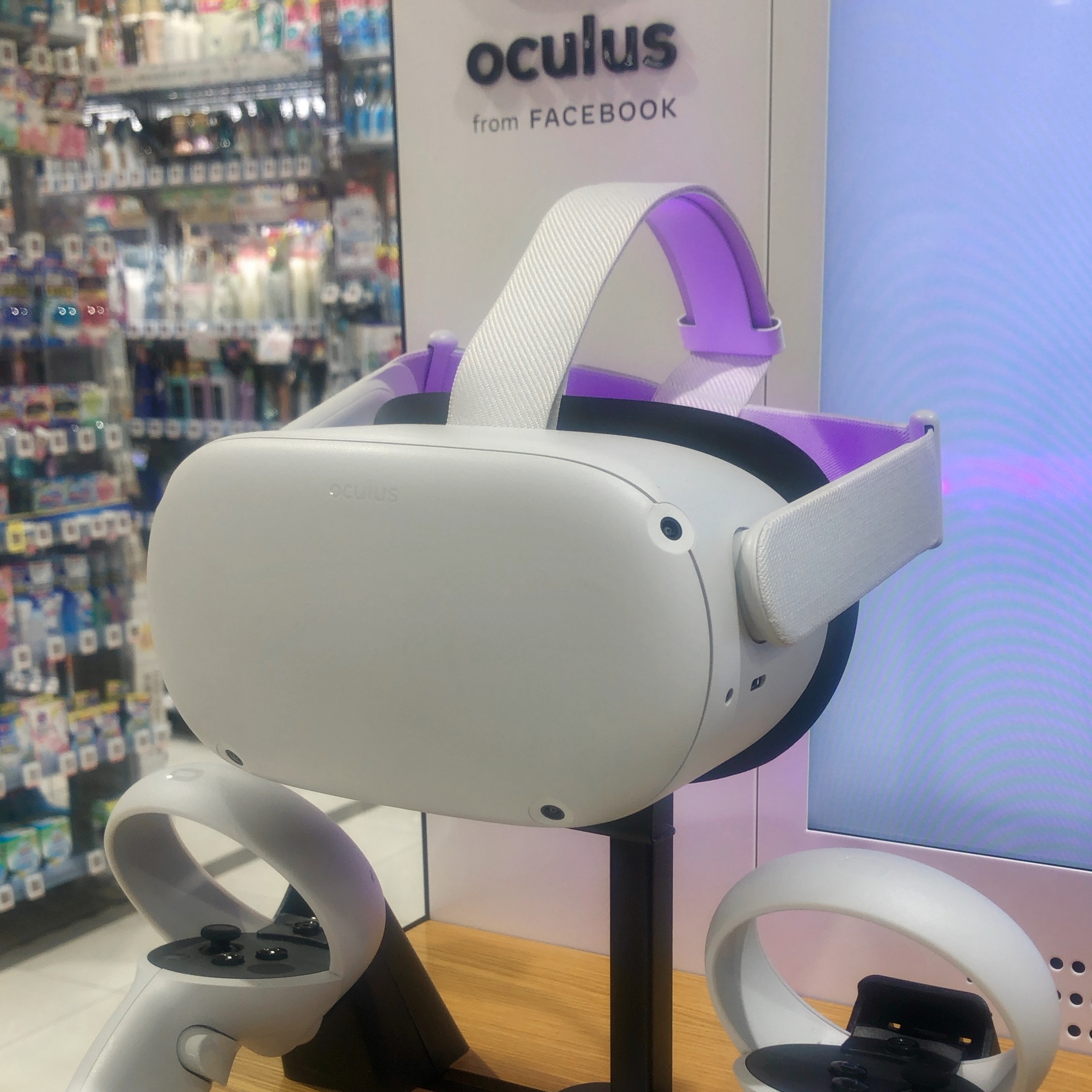
1 Silicon Architecture: Qualcomm Snapdragon XR2 Gen 1 Compute Engine
When the Oculus Quest 2 launched, it represented a monumental generational leap over the original Quest. At the core of the headset sits Qualcomm's purpose-built Snapdragon XR2 Gen 1 platform, fabricated on a 7nm FinFET process.
Compared to the legacy Snapdragon 835 processor in the first-generation Quest, the XR2 platform delivered:
- 2x CPU and GPU Performance: Powered by an 8-core Kryo 585 CPU (1x Prime Core up to 2.84 GHz, 3x Performance Cores at 2.42 GHz, and 4x Efficiency Cores at 1.8 GHz) paired with the Adreno 650 graphics processor.
- 4x Video Bandwidth: Native support for 8K 360-degree video decoding at 60 FPS, enabling crystalline VR media playback and low-latency hardware video stream decoding for PC VR tethering.
- 11x AI Processing Throughput: Dedicated Hexagon DSP and AI tensor accelerator processing concurrent camera feeds, hand tracking poses, and room spatial mesh reconstruction simultaneously in background microcode.
- 6 GB of High-Speed LPDDR4X RAM: A 50% increase in memory capacity over the original Quest's 4GB, enabling richer texture mipmaps, complex physics sub-stepping, and smooth OS multitasking.
Over the lifespan of the headset, Meta systematically unlocked additional performance headroom through software firmware updates. By optimizing thermal acoustic curves and governor profiles, Meta increased the active GPU clock ceiling from 490 MHz to 545 MHz, providing developers with an extra 19% compute headroom that enabled dynamic resolution scaling and unlocked 90Hz and 120Hz modes in top standalone titles.
2 Optical Pipeline: 1832×1920 Fast-Switch LCD & 120Hz High Refresh Rate
The visual engine of the Quest 2 is built around a single high-density Fast-Switch LCD panel boasting a resolution of 1832 × 1920 pixels per eye (3664 × 1920 total panel resolution). This represented a dramatic 50% increase in total pixel count over the original Quest, virtually eradicating the notorious "screen-door effect" (the visible black grid between pixels) that plagued first-generation consumer VR headsets.
The display utilizes RGB sub-pixel stripe layout, ensuring three full color sub-pixels per pixel for crisp text rendering, fine UI menus, and distant object legibility in flight simulators and shooters.
The optical path employs custom Fresnel lenses offering approximately a 90-degree to 96-degree horizontal Field of View (FOV). To accommodate varying facial anatomies, the lenses feature a mechanical 3-position Interpupillary Distance (IPD) slider:
- Setting 1: 58mm (Narrow IPD for smaller interpupillary distances)
- Setting 2: 63mm (Average / Medium IPD covering the majority of users)
- Setting 3: 68mm (Wide IPD for wider eye distances)
While Fresnel optics exhibit concentric ring glare (god rays) in extreme high-contrast scenes (such as white text on pure black backgrounds), the optics deliver exceptional center-to-edge clarity and vibrant color saturation across gaming environments.
The panel supports dynamic refresh rates of 72Hz, 90Hz, and 120Hz. Running games at 120Hz delivers ultra-low motion-to-photon latency (<15ms), dramatically reducing vestibulo-ocular disorientation and motion sickness during rapid head rotations in fast-paced rhythm games like Beat Saber and competitive shooters like Pavlov Shack.
Integrated directional spatial audio drivers built directly into the side headband struts pipe positional 3D sound straight to your ears without requiring headphones, maintaining situational awareness of your physical room while delivering surprisingly crisp stereo imaging and dialogue clarity.
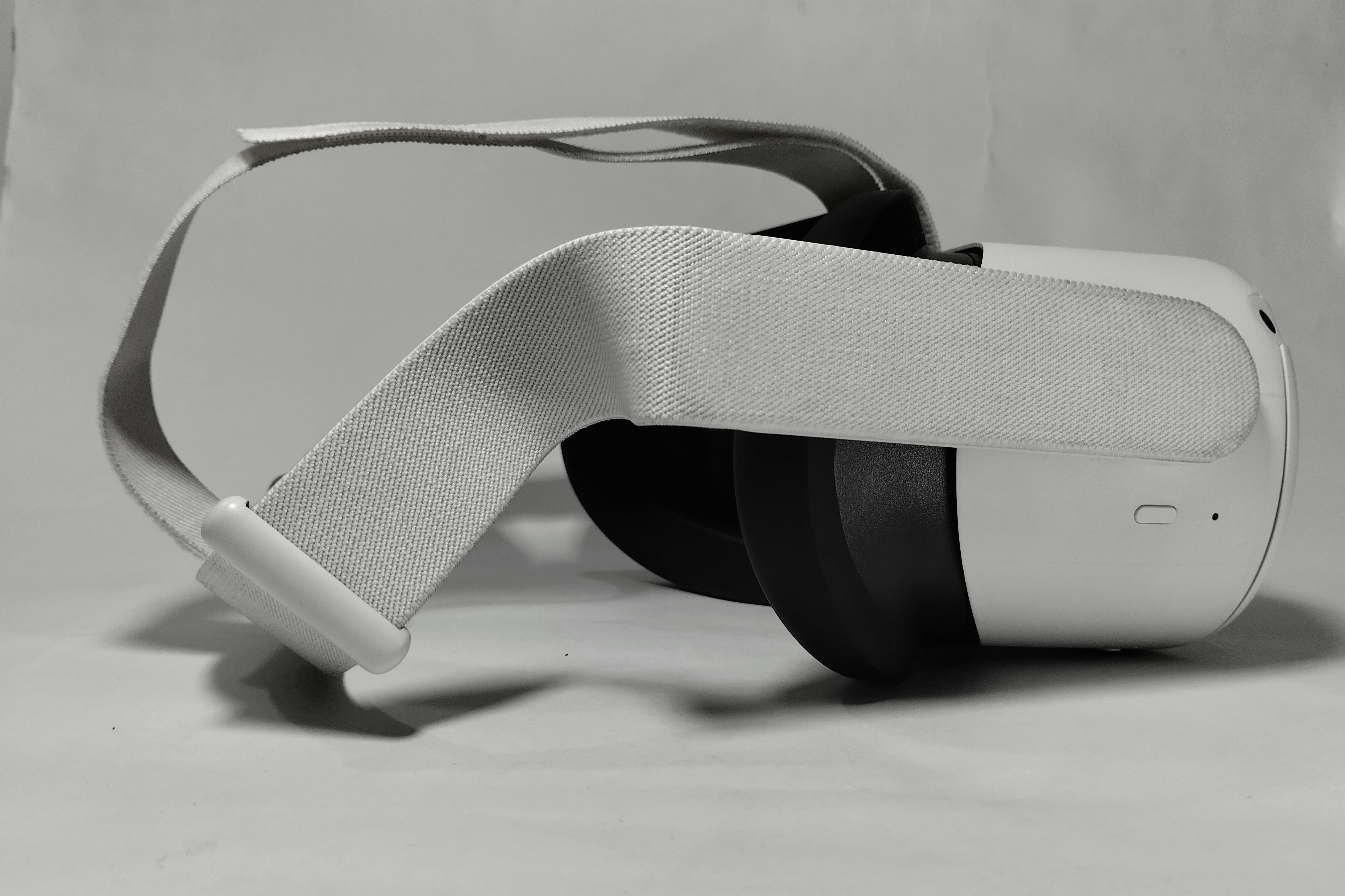
3 Inside-Out 6DOF Tracking & Guardian Boundary Safety
Setting up a traditional tethered VR headset in 2016 required drilling base stations into wall corners, running extension cords, and calibrating infrared lasers. The Quest 2 redefined this experience with its revolutionary Oculus Insight inside-out tracking architecture.
Four ultra-wide-angle infrared tracking cameras embedded in the front corners of the visor continuously map millions of high-contrast feature points in your physical room at 60 Hz. Combined with internal high-frequency 1KHz Inertial Measurement Units (IMUs) containing gyroscopes and accelerometers, the headset computes its exact position in 3D space with sub-millimeter precision and zero drift.
The integrated Guardian Boundary System allows users to draw a safe virtual play space on the floor using controller lasers. If the user approaches the boundary during gameplay, a translucent luminous grid smoothly fades into view, warning the player before they collide with walls or furniture. If the user steps completely outside the boundary, the headset automatically engages Passthrough mode, displaying the real-world room.
Additionally, Meta's computer-vision engineers unlocked Markerless Hand Tracking 2.0. The tracking cameras track individual finger joints, pinch gestures, and palm poses directly, allowing users to navigate menus, type on virtual keyboards, and interact with educational simulations without holding controllers.
The tracking volume covers approximately 210 degrees horizontally and 160 degrees vertically around the player. Even when controllers are held momentarily behind the back (such as drawing an arrow from a quiver), advanced predictive kinematic algorithms maintain accurate positional estimations until the controller re-enters the camera cone.
4 Wireless PC VR: Air Link, Virtual Desktop & Steam Link
While the Quest 2 is an extraordinary standalone gaming console, its secret superpower is serving as a world-class Wireless PC VR Headset.
Rather than tethering the user with heavy, tripping-hazard HDMI cables, the Quest 2 connects to your high-performance gaming PC over standard 5GHz / Wi-Fi 6 wireless networking. The gaming PC renders VR titles (such as Half-Life: Alyx, Microsoft Flight Simulator, and Assetto Corsa) at ultra-high settings, encodes the video frames using NVENC or AMD hardware encoders into H.264, HEVC, or AV1 streams at bitrates up to 200–500 Mbps, and beams the stream wirelessly to the headset in under 35 milliseconds of total round-trip latency.
This hybrid dual-nature capability gives the Quest 2 an enormous advantage over dedicated standalone or dedicated PC-only headsets. You get the portable convenience of untethered standalone VR for casual gaming and travel, plus the breathtaking graphical photorealism of a $2,000 RTX 4080 gaming PC rig whenever you sit down in your home office or living room.
| Streaming Protocol | Connection Method | Max Encoding Bitrate | Motion-to-Photon Latency | Best Use Case |
|---|---|---|---|---|
| Meta Quest Air Link | Wireless Wi-Fi 6 (5GHz Dedicated) | 200 Mbps Dynamic / Fixed | 34 - 38 ms | Official Rift Store & Native Meta PC titles |
| Virtual Desktop | Wireless Wi-Fi 6 (HEVC / 10-bit Codec) | 150 - 400 Mbps (H.264+) | 28 - 34 ms | Power Users / Color Grading & Snapdragon Super Res |
| Steam Link VR | Wireless Wi-Fi 6 (SteamVR Native) | 350 Mbps Dynamic | 32 - 36 ms | Direct SteamVR Library Launch & Simplicity |
| Oculus Link (USB-C Cable) | Wired 5Gbps USB-C 3.2 Gen 1 | 500 - 900 Mbps (ODT Override) | 24 - 28 ms | Sim Racing & Seated Flight Simulators |
Playing Half-Life: Alyx completely untethered—physically ducking behind virtual barricades, turning 360 degrees freely without wrapping cables around your legs—remains one of the peak interactive entertainment experiences possible today.
To achieve optimal wireless streaming performance, our lab recommends connecting your host gaming PC directly to your router via a Gigabit or 2.5Gbps Ethernet cable, while ensuring the Quest 2 connects to a dedicated 5GHz or Wi-Fi 6 (802.11ax) channel on an uncrowded 80MHz channel width. This ensures a rock-solid 1,200 Mbps wireless PHY link rate that eliminates frame drops and visual micro-stuttering.
5 Meta Touch Controllers: Ergonomics & Incredible Battery Efficiency
The third-generation Meta Touch Controllers are widely regarded as the gold standard of VR input design. Featuring an ergonomic curved grip, a prominent infrared tracking constellation ring, and capacitive touch sensors embedded in the thumbsticks, trigger, and face buttons, the controllers detect whether your fingers are resting on or lifted off the buttons to replicate natural hand gestures (pointing, thumbs-up, fist clenching) in virtual space.
The most astonishing technical achievement of the Touch controllers is their power efficiency. Unlike rechargeable VR controllers that die after 4 to 8 hours of gameplay, each Touch controller runs on a single standard AA battery that lasts an incredible 60 to 80+ hours of continuous gameplay thanks to ultra-low-power radio polling sleep cycles. You can play for months on a single pair of rechargeable Eneloop AA batteries before swapping them in 5 seconds.
Furthermore, the physical tracking ring contains infrared LEDs pulsing at micro-second intervals invisible to human eyes, which are tracked by the headset's corner cameras at 60 Hz. This yields sub-millimeter positional fidelity even during rapid sword swings in Beat Saber or rapid-fire handgun draws in Pistol Whip.
6 Standalone Software Ecosystem & Landmark VR Games
The Meta Horizon Store contains the most expansive, diverse, and commercially successful library of virtual reality software in the world:
- Beat Saber: The legendary rhythm slasher that defined the medium, running at an immaculate 120 FPS with zero tracking latency.
- Resident Evil 4 VR: A masterclass first-person full-campaign conversion of Capcom's masterpiece with dual-wielding weapon mechanics, physical reloading, and spatial 3D audio.
- The Walking Dead: Saints & Sinners: Gritty physics-based survival combat, weapon crafting, and deep narrative exploration.
- Superhot VR & Pistol Whip: Time-manipulating puzzle action and cinematic gunplay that transform your living room into an action movie set.
- VR Fitness & Productivity: Apps like Les Mills Bodycombat, Supernatural, and Immersed (multi-virtual-monitor workspace) deliver genuine cardiovascular health and workplace utility.
Beyond the official store, the Quest 2 supports SideQuest and developer sideloading via Android Debug Bridge (ADB). Enthusiasts can install custom VR ports of retro classics like Doom 3, Return to Castle Wolfenstein, Half-Life 1 (Lambda1VR), and Star Wars Jedi Knight II, running fully native on the Snapdragon XR2 processor with 6DOF room-scale tracking.
In addition to controller input, the Quest 2 features cutting-edge Direct Hand Tracking 2.0 powered by deep neural networks running on the XR2 AI accelerator. You can put down the controllers completely and navigate system menus, pinch virtual sliders, browse the web, or play interactive hand-physics games like Hand Physics Lab and Cubism using only your bare hands and natural finger gestures.
Audio is delivered via spatial speakers integrated directly into the rigid strap struts, channeling 3D directional sound directly into your ears without blocking your surrounding room awareness—vital for maintaining household situational safety while immersed in virtual realities.
7 Comfort Engineering: Essential Aftermarket Upgrades
If the Quest 2 has one notable flaw out of the box, it is weight distribution. Because the entire computing engine, battery, display, and optical block reside inside the front visor (weighing 503 grams), the default elastic fabric strap pulls the visor tightly against the user's cheekbones and forehead, leading to facial fatigue after 45 minutes of play.
Fortunately, the Quest 2's massive popularity created the largest aftermarket accessory ecosystem in gaming history. Upgrading two key components transforms the headset into an all-day comfort machine:
- Halo / Rigid Battery Head Strap (e.g. BOBOVR M2 Pro / Kiwi Design): Replaces the fabric strap with an adjustable dial-ratchet halo frame that distributes weight across the crown of the head. Adding a magnetic rear battery pack acts as a mechanical counterweight, perfectly balancing center of gravity while doubling total battery life to 5 to 6 hours.
- Ventilated Facial Interface (e.g. VR Cover): Soft PU leather padding with passive ventilation vents prevents lens fogging during intense cardio workouts and wipes clean effortlessly.
8 Head-to-Head: Meta Quest 2 vs Quest 3 vs Quest 3S
| Feature Specification | Meta Quest 2 | Meta Quest 3S | Meta Quest 3 |
|---|---|---|---|
| Current Market Price | $199 - $249 (Best Budget) | $299.99 | $499.99 (Premium) |
| Processor SoC | Snapdragon XR2 Gen 1 (7nm) | Snapdragon XR2 Gen 2 (4nm) | Snapdragon XR2 Gen 2 (4nm) |
| Optical Lens Type | Fresnel Lenses (3-Position IPD) | Fresnel Lenses (3-Position IPD) | Pancake Optics (Continuous IPD) |
| Per-Eye Resolution | 1832 × 1920 (773 PPI) | 1832 × 1920 (773 PPI) | 2064 × 2208 (1218 PPI) |
| Passthrough Cameras | Monochrome (Black & White) | Full Color 4MP Passthrough | Full Color 4MP + Depth Sensor |
| Touch Controller Type | Touch V3 (Tracking Ring / 80h AA) | Touch Plus (Ringless / TruTouch) | Touch Plus (Ringless / TruTouch) |
9 Long-Term Durability & Lens Safety Best Practices
To ensure your Quest 2 maintains flawless optical and tracking performance over years of ownership, observe these golden rules of VR hardware care:
- NEVER Expose Lenses to Direct Sunlight: The convex Fresnel lenses act as powerful magnifying glasses. Exposing the lenses to direct sunlight for even 10 seconds will permanently burn yellow spots into the internal LCD panel. Always store the headset facing away from windows, or use a foam lens protector cap when not in use.
- Clean Lenses Exclusively with Microfiber Cloths: Never use chemical cleaners, Windex, alcohol wipes, or paper towels on VR lenses, as these will permanently strip the anti-reflective and anti-scratch optical coatings.
- Glasses Spacer Installation: If you wear prescription eyeglasses, always install the included plastic glasses spacer bracket to prevent your glasses frames from scratching the delicate optical glass, or invest in custom magnetic prescription lens inserts.
10 Frequently Asked Questions (FAQ)
Do I need a Facebook account to use the Oculus Quest 2?
No. Meta completely decoupled the Facebook social media requirement. You only need a dedicated, private Meta Account (similar to an Apple ID, Steam, or PlayStation Network account) to register the headset and purchase games, with zero mandatory social media linking.
Can the Quest 2 play SteamVR games without a PC?
No. SteamVR games run on your PC's GPU and CPU and stream to the Quest 2 wirelessly over Wi-Fi. However, the Quest 2 has its own standalone Meta Horizon Store with hundreds of full native games (Beat Saber, Resident Evil 4, Superhot, Population: ONE) that install and play directly on the headset with zero PC required.
How long does the Quest 2 internal battery last during gameplay?
The internal 3,640 mAh lithium-ion battery provides approximately 2 to 2.5 hours of continuous gaming, or 3 hours of media streaming. Adding an aftermarket head strap with a hot-swappable 5,000 mAh rear battery pack extends total playtime to 5 to 6 hours.
Can I watch movies and stream Netflix / YouTube in VR on Quest 2?
Yes. The Quest 2 offers dedicated apps for YouTube VR, Netflix, Amazon Prime Video, and Bigscreen VR. In Bigscreen VR, you can sit in a virtual 300-seat movie theater with friends or stream your PC desktop screen directly onto a gigantic IMAX-sized virtual display.
Does the Oculus Quest 2 cause motion sickness?
Motion sickness varies per individual and comfort rating of the experience. Stationary games (like Beat Saber, Superhot, and Moss) produce virtually zero motion sickness. For games with smooth thumbstick locomotion (like Resident Evil 4), developers include comfort vignettes and snap-turning options to help beginners acclimate and build their 'VR legs' gradually in 15-minute sessions.
Can I use Apple AirPods or standard Bluetooth headphones with Quest 2?
Yes, the Quest 2 pairs with any standard Bluetooth audio device in the experimental settings menu. However, standard Bluetooth introduces 150-200ms of audio latency. For rhythm games like Beat Saber, we strongly recommend using the built-in 3.5mm headphone jack or low-latency 2.4GHz wireless gaming earbuds (such as the Soundcore VR P10).
Final Verdict: 9.5 / 10
The Meta Oculus Quest 2 is a watershed achievement in consumer electronics. Delivering complete standalone wire-free freedom, precise inside-out 6DOF tracking, a sharp 120Hz display, and unmatched wireless PC VR versatility at an entry price point under $200, it remains the greatest value in virtual reality history.